Taktsang Lhamo is the Tibetan name for the small and scenic village of Langmusi, a well-known destination for backpackers and nature enthusiasts located on the border between Gansu and Sichuan provinces. For visitors, the principal attractions are its two distinct monasteries, Kirti Gompa and Sertri Gompa, which stand on opposite sides of the provincial boundary, as well as the outstanding hiking and horse trekking opportunities available in the surrounding mountains and grasslands. The area takes its name from a legendary female guardian who is said to have vanquished tigers, an origin story from which the village derives its name—Taktsang Lhamo.
The Zhangye Danxia National Geological Park (often called Rainbow Mountain) is a stunning natural wonder in Gansu Province, northwest China. Its landscape is famous for dramatic, rainbow-striped rock formations created by millions of years of mineral deposits, tectonic shifts, and wind and water erosion. The exposed sandstone layers paint the hills in vivid bands of red, orange, yellow, green, and blue. In 2010, the site was designated a UNESCO World Heritage Site and remains one of China’s most photographed landscapes.
My Italian clients had the privilege of visiting a Tibetan village in Amdo during the vibrant Lurol Festival. We were greeted with such genuine warmth by the village head, who generously offered us everything—delicious food, refreshing drinks, fresh fruit, and even bottles of grappa, much to our delight. Everyone in the group was truly moved by the beauty of the festival and the incredible hospitality we received. It was an experience none of us will ever forget.
This year’s Lurol Festival, held from 1 August to 7 August 2026, was a joyful success, filled with unforgettable experiences. We warmly invite all enthusiastic travelers to look forward with us and explore our schedule for next year’s Lurol Festivals, which promise to be even more vibrant and inspiring.
Lurol Festivals
Second Lhapa (Shaman)from Horgya village
Lurol is a unique culture that has thrived for thousands of years, passed through generations, and is deeply rooted in the heart of Tibet. Its rich traditions and customs reflect the resilience and spirit of the people who call this region home. Embracing both history and community, Lurol continues to inspire and captivate those who seek to understand its timeless essence. Discover the beauty and significance of this extraordinary heritage.
The Lhapa, Shaman who possessed the spirits after offering his own blood.
The Lhapa from Lingya village.
Back piercing in Togya village Lurol in Horgya village
The circle dance in Horgya village
Mouth piercing and back piercing dancing Mouth piercing Young girls coral decoration and youth dance offerings Circle dance Lingya village
Held according to the lunar calendar, the Chentsa Mani Festival begins on the 5th day of the fifth month—this year falling on June 19th. For the local people of Nangsotod and surrounding areas, this four-day event is much more than a simple gathering; it is a cherished tradition that weaves together the spiritual and the social fabric of the community.
At its heart, the festival is deeply rooted in faith. The spiritual ceremonies take place at a temple founded by the great master Chogyal Dongdup Rinchin, a formal teacher of Tsongkhapa. According to local lore, the master discovered a special spring in the valley and harnessed its waters to power a sacred prayer wheel. Over time, the water gained a reputation for its healing properties, particularly for curing eye infections, earning it the name Chenchumani—literally, “the eye-cure water.” A temple was later built at the site, and to this day, pilgrims come to pay homage, while monks perform rituals and ceremonies that last for days.
On a social level, the festival has historically served as a vital meeting point for people of all ages. For children, it is a time of joy and play; for the younger crowd, a romantic stage to find love; and for the elderly, a precious opportunity to reunite with friends and relatives they may not have seen for a year or more.
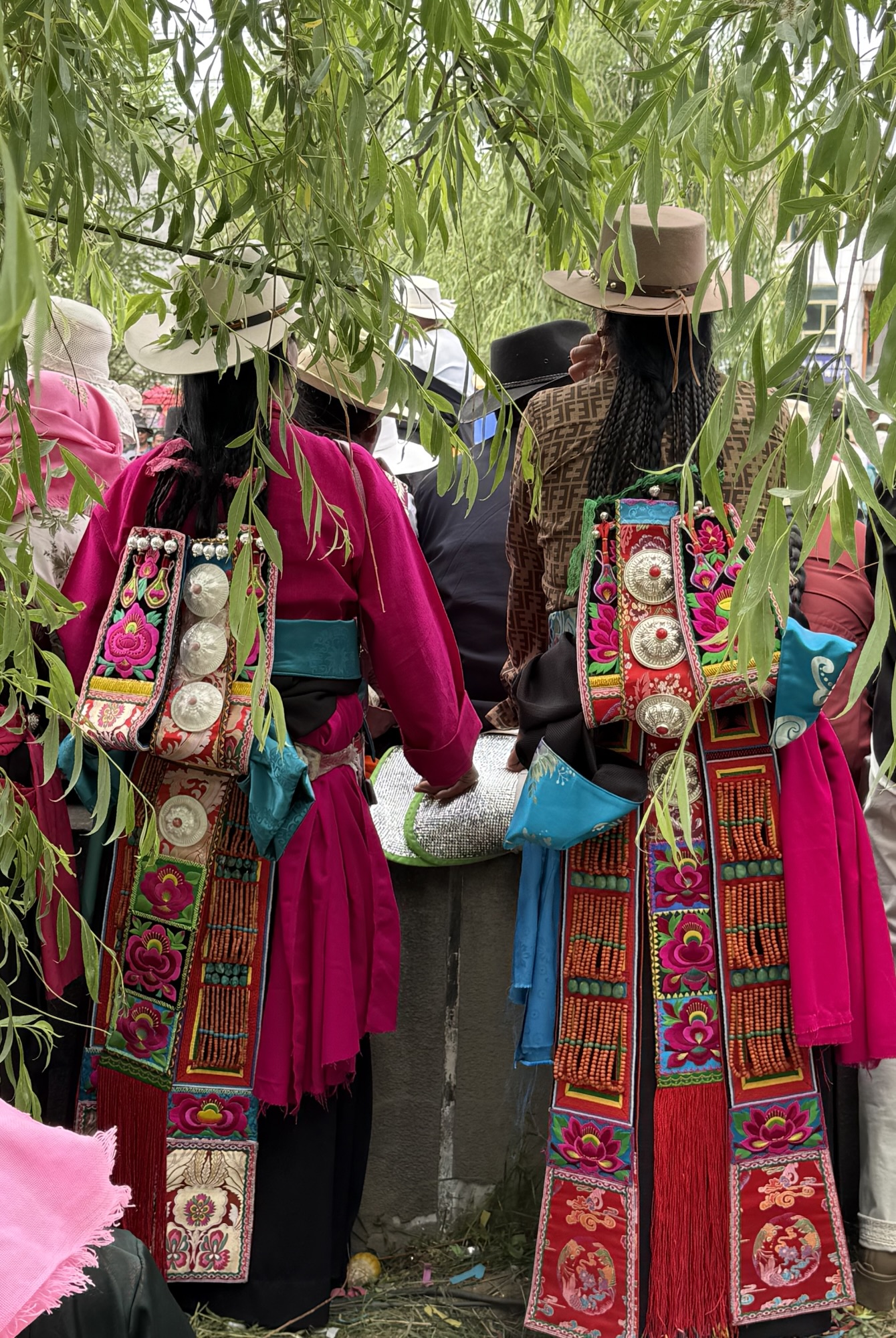
What truly sets the Chentsa Mani Festival apart is the singing of love songs between men and women, which traditionally takes place after the spiritual observances conclude. It is a vibrant scene, especially for teenagers seeking partners. Everyone dresses in their finest attire, and the ladies are particularly eye-catching, adorned in exquisite traditional costumes and jewelry—their coral backpieces gleaming beautifully in the sunlight.
The medicine water
The festival is also a bustling marketplace. Businessmen and vendors, mostly Hui Muslims and Han Chinese, set up stalls, while the local Tibetans often take on the role of delighted customers, enjoying the festive atmosphere and the day’s entertainment.
In years past, the festival featured thrilling horse races and archery contests. However, as with many traditions around the world, time has brought change. Modernity has quietly eroded some of the old charms. For the younger generation, the search for love has shifted from festival courtship to smartphone screens, and the once-abundant number of traditional singers has noticeably dwindled.
I remember my own childhood vividly: the festival grounds would echo with the voices of school singers, one performance following another in joyful succession. Young men, dressed in their traditional best, would strut about proudly, carrying stereo cassette players on their shoulders—a symbol of coolness and pride in those days. Those sights, those sounds, and that unique feeling of community are treasures I fear may never be fully replicated. The festival endures, but like the changing seasons, it carries a different spirit now—one that bridges the sacred past with a rapidly evolving present.
I happened to encounter ritual and Fire puja activities in Kumbum monastery. I immediately checked the calendar and found out that today is 15th April according to Tibetan calendar. I have been here many times but never seen anything like this before. Therefore, I watched them thoroughly and it’s fascinating the way they are doing it.
Drawing vajra with colored sand Draft
All is organic and nothing chemical
The was also Shalthng Chenmo; giant Thankha display in the morning but we missed out
This landscape is a stunning display of natural erosion and the raw beauty of sedimentary rock formations. Nature enthusiasts can’t help escaping from their cities to get here.
Undiscovered secrets
A whole day must be spent to discover this majestic landforms
Stretching boundlessly, the grasslands extend far and wide, while the Yellow River flows serenely, dividing the land into two distinct realms. Untrammeled by human disturbance, this place exudes an air of profound tranquility, where even the distant chirping of birds drifts clearly across the expanse.
Machu Very friendly Yaks
I must truly admit that this is a must-visit haven for nature aficionados
Karothang village, Jiantsa mani. Qinghai, Amdo region.
The bride is escorted by some of ladies from her village. On the arrival day.Groom second from the left and bride second from the right.Typical custom design for the region All the people in the village are called to the party Steamed Momo. Hundreds of them made early in the morning and they were yummy Milk tea Ladies make Thenthuk; noodles Tsampa with Dri butter, dry cheese and sugar