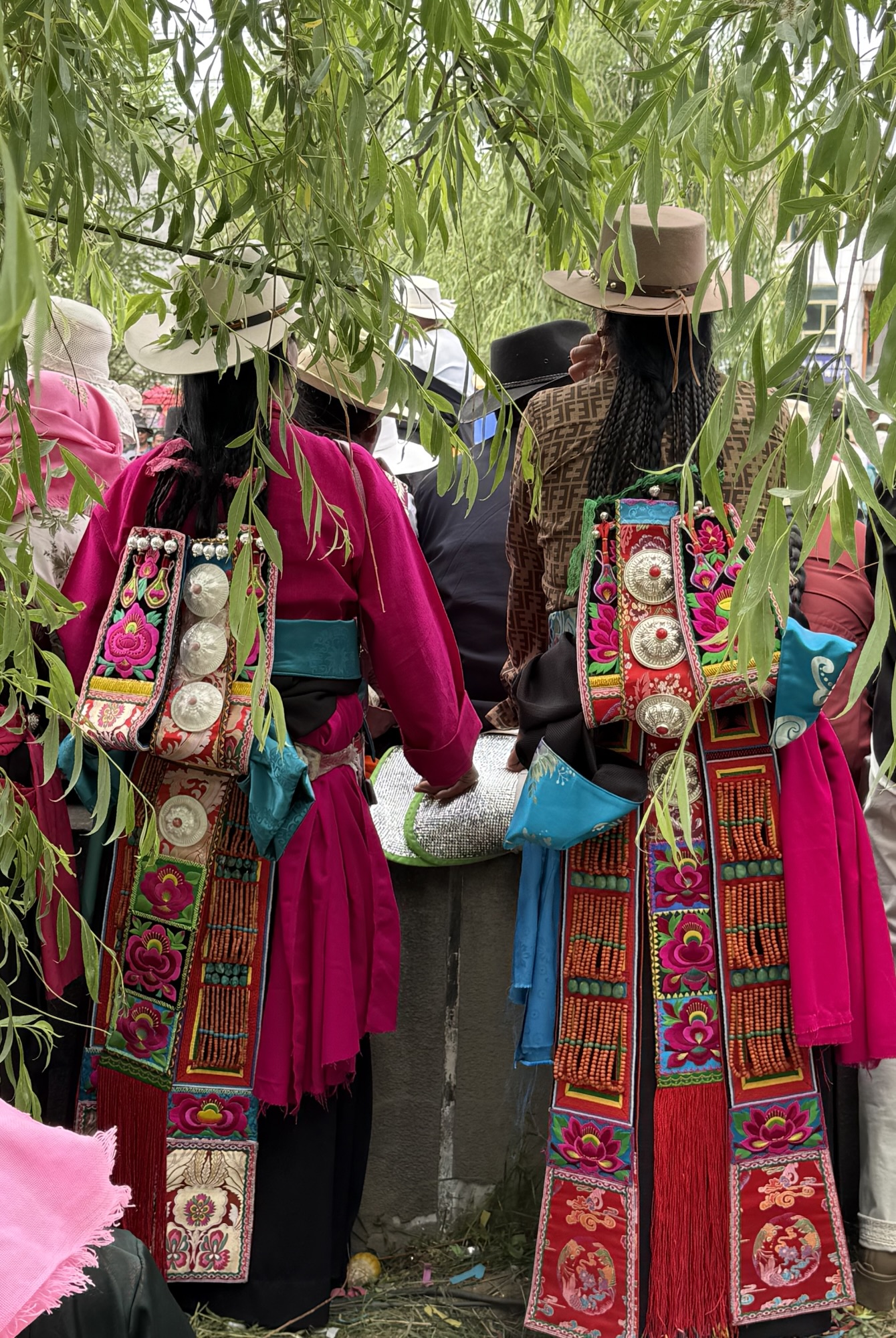

Held according to the lunar calendar, the Chentsa Mani Festival begins on the 5th day of the fifth month—this year falling on June 19th. For the local people of Nangsotod and surrounding areas, this four-day event is much more than a simple gathering; it is a cherished tradition that weaves together the spiritual and the social fabric of the community.

At its heart, the festival is deeply rooted in faith. The spiritual ceremonies take place at a temple founded by the great master Chogyal Dongdup Rinchin, a formal teacher of Tsongkhapa. According to local lore, the master discovered a special spring in the valley and harnessed its waters to power a sacred prayer wheel. Over time, the water gained a reputation for its healing properties, particularly for curing eye infections, earning it the name Chenchumani—literally, “the eye-cure water.” A temple was later built at the site, and to this day, pilgrims come to pay homage, while monks perform rituals and ceremonies that last for days.

On a social level, the festival has historically served as a vital meeting point for people of all ages. For children, it is a time of joy and play; for the younger crowd, a romantic stage to find love; and for the elderly, a precious opportunity to reunite with friends and relatives they may not have seen for a year or more.

What truly sets the Chentsa Mani Festival apart is the singing of love songs between men and women, which traditionally takes place after the spiritual observances conclude. It is a vibrant scene, especially for teenagers seeking partners. Everyone dresses in their finest attire, and the ladies are particularly eye-catching, adorned in exquisite traditional costumes and jewelry—their coral backpieces gleaming beautifully in the sunlight.

The festival is also a bustling marketplace. Businessmen and vendors, mostly Hui Muslims and Han Chinese, set up stalls, while the local Tibetans often take on the role of delighted customers, enjoying the festive atmosphere and the day’s entertainment.

In years past, the festival featured thrilling horse races and archery contests. However, as with many traditions around the world, time has brought change. Modernity has quietly eroded some of the old charms. For the younger generation, the search for love has shifted from festival courtship to smartphone screens, and the once-abundant number of traditional singers has noticeably dwindled.
I remember my own childhood vividly: the festival grounds would echo with the voices of school singers, one performance following another in joyful succession. Young men, dressed in their traditional best, would strut about proudly, carrying stereo cassette players on their shoulders—a symbol of coolness and pride in those days. Those sights, those sounds, and that unique feeling of community are treasures I fear may never be fully replicated. The festival endures, but like the changing seasons, it carries a different spirit now—one that bridges the sacred past with a rapidly evolving present.


