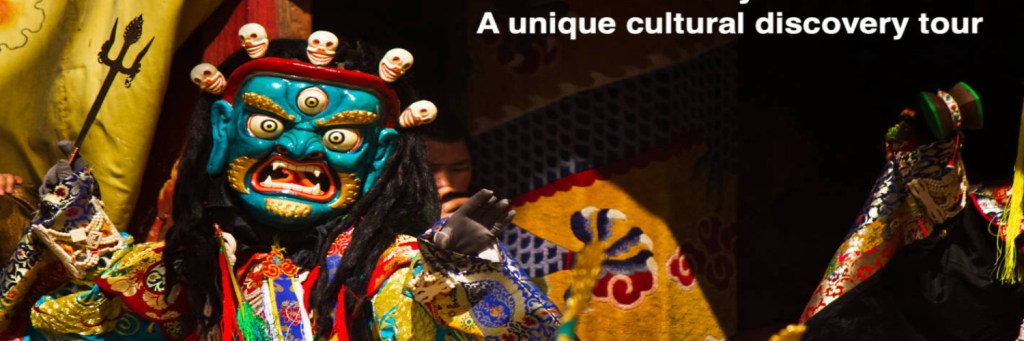
Losar, the Tibetan New Year, is a vibrant celebration that invites you to experience a rich tapestry of culture and tradition. While it’s a time for family gatherings indoors, it also offers a unique opportunity to venture out and witness stunning customs, such as Cham dances and Thankha displays, alongside the warm-hearted people in the monasteries of each village or region. This celebration, known as Monlam, allows you to join in the festivities and immerse yourself in the joyous spirit of Losar and Monlam, where every moment is filled with color and life. Embrace the excitement and create unforgettable memories during this special time!
Discover the unique culture of Tibet
This trip is customized to discover the most Tibetan cultural events of the year, which include; Thangka Display, Cham (mask dance), Future Buddha processing, Butter sculpture, Guards marching and community gathering, Sang offering, Lurol Fest, new year Festivals, and so on.
Destination: Amdo, Tibetan areas of Qinghai, Gansu, Sichuan province.
Best season to visit: late January-February
Departure fixed: 21/Feb//2026
Trip length: 14-days
Trip type: cultural
🌡 ☪ -10~16°c ☀️ +5~14°c
Group size: 2-14
D01. Xining
D02.Rebgong
D03.Rebgong
D04.Rebgong
D05.Wanggya
D06.Labrang
D07.Taktsang Lhamo
D08-12.Ngawa
D13.Chengdu
D14.Departur
Which region in Amdo excels at the Monlam festival?
Following are the regions which proforms the best Monlam in Amdo
- Rebgong
- Ngwa.
- Taktsan Lhamo
- Luchu (Luqu)
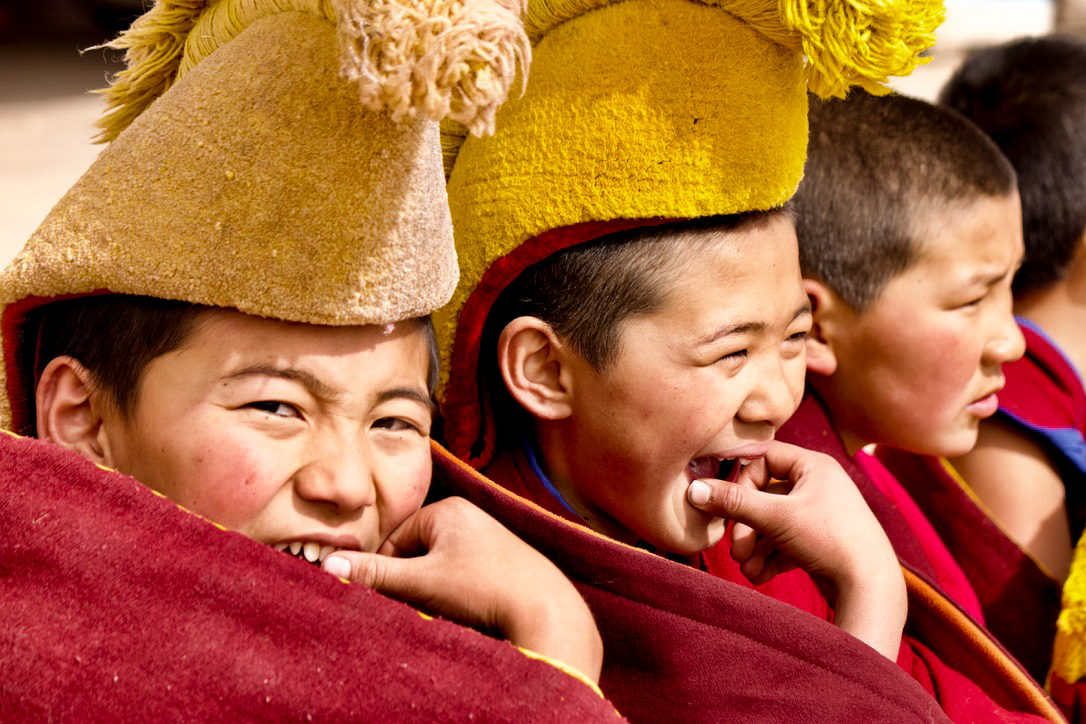
It is called Monlam Chenmo in Tibetan. Monlam means to pray and Chenmo means great. So All together it means ‘The Great Prayer’. It occurs in all most all over Tibet during this period of time but the areas listed in the program below are the best and top chosen in the region.
It’s both a spiritual and social level event that happens along with Tibetan new year festivals and lasts more than 10 days, and it’s a tradition that has been passed for hundreds of years is still kept alive in many parts of Tibet, and the following places are the best and strong holders of their unique culture. Rebgong,(in Qinghai) luqu (in Gansu),Taktsang lhamo (in SIchuan), Ngawa (in Sichuan).
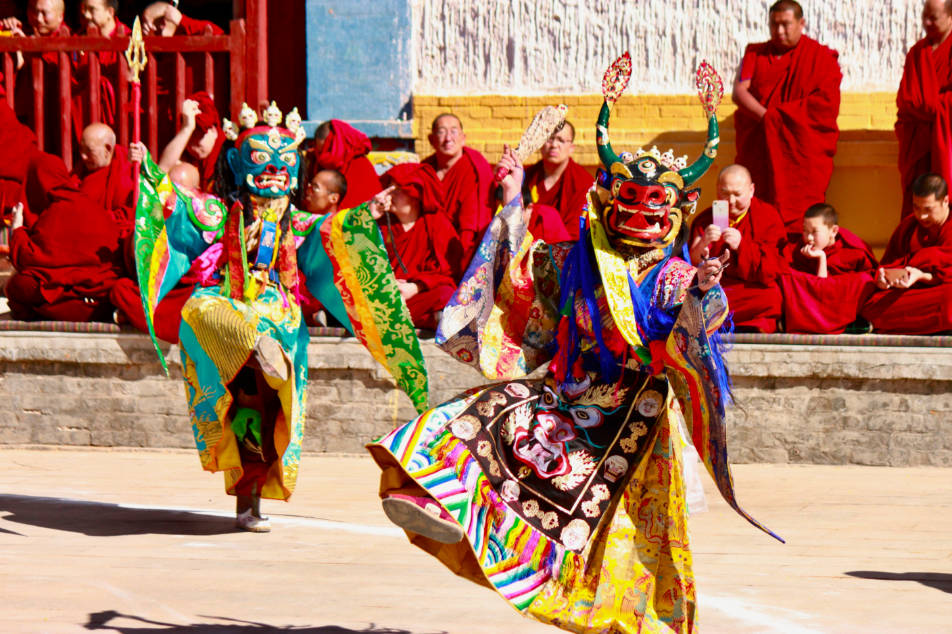
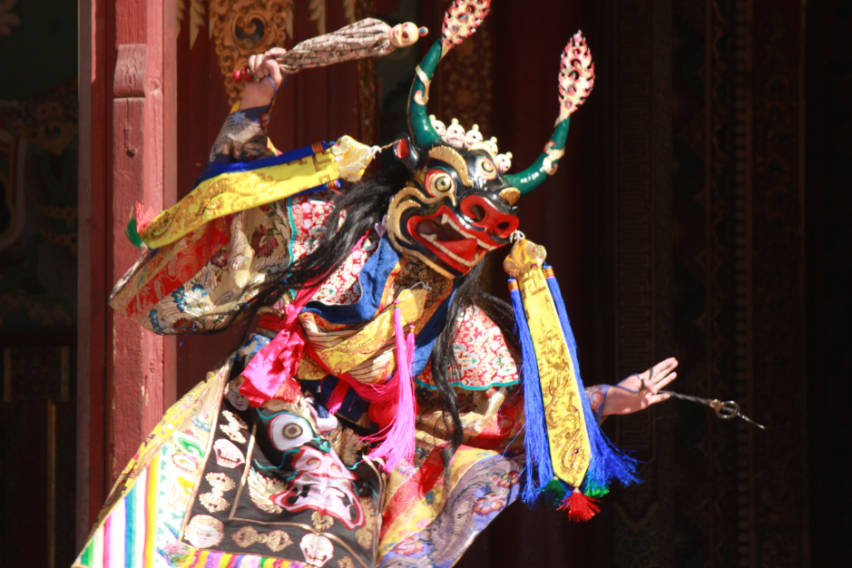
Rebgong is the cultural hub of Amdo and it starts the Monlam earlier than any other region in Amdo. They are many communities and monasteries in Rebgong and each one of them performs its own Monlam on different days. One can spend days in this region to see all the different, spectacular fests. Each monstery offers three days of Monlam. the first day is for the Giant Thangka display, the second day is for future Buddha procession and the third day Is for Cham (masked- dances
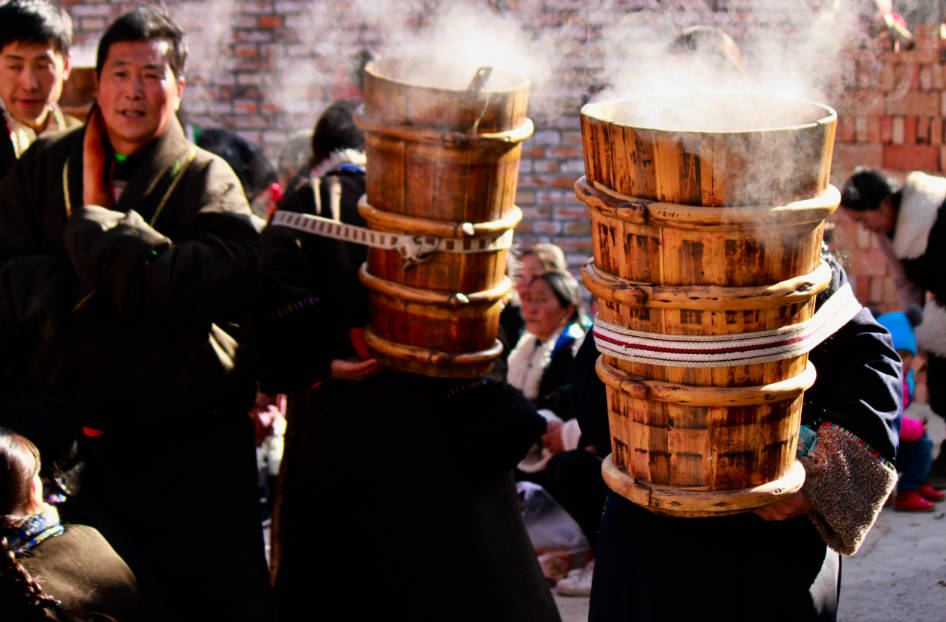
Mangja. public tea offering. at the Gonmar monastery, ladies carrying the hot milk tea in the wooden buckets from the monastery kitchen are offered to anyone who is present in the courtyard, including the tourists, but everyone should bring a cup by themselves. local, homemade bread is also offered at the same time. soon after the Mangja, milk tea, Everybody is ready to catch the Sitok (fruits and sweets). Some men go on the roof and throw Sitok. A rain of Sitok falls above your head and everybody tries to catch them as fast as possible. It’s quite an exacting moment all. A giant Thangka display is soon proceeded by this event.
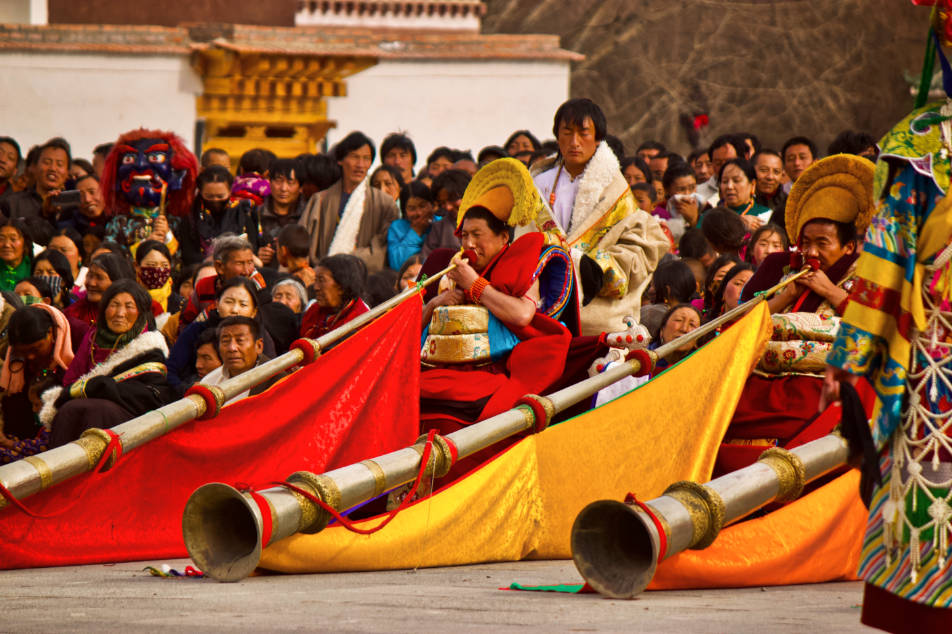
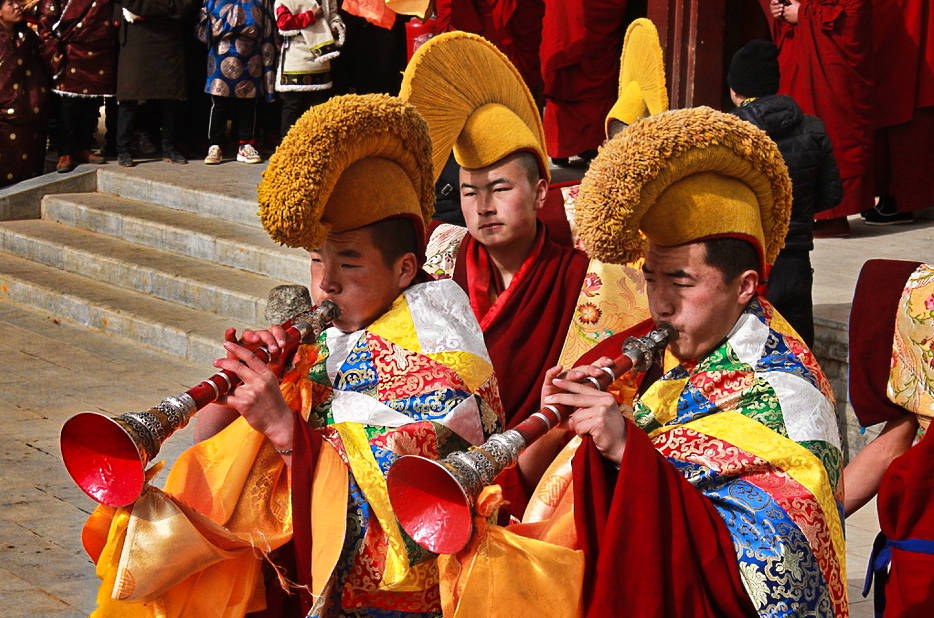
Some monks are trained to blow the Dongchen; the bighorn The musicians
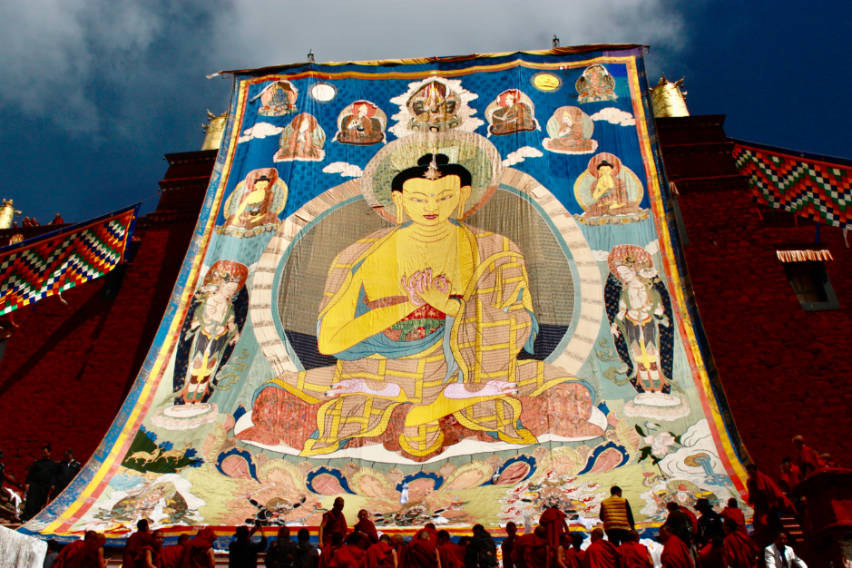
Giant Thangka display (about 30m high and 20m wide). Most of the monasteries have three days of the Monlam festival. One day for the Thangka display, the second day for Buddha Maytria (future buddha) procession, and the third day for Cham(mask dances). Before the Thangka is displayed, a ritual ceremony is held and then about a hundred young boys carry it on their shoulders towards the display wall, in the meantime, the boys also chant some mantra in a medium volume of their voice.
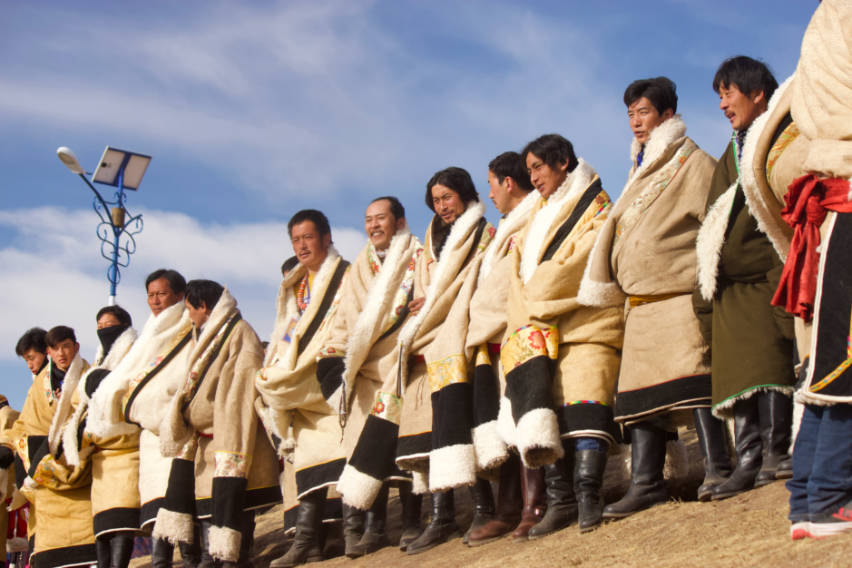
Shitsang Gonpa (monastery), in Luqu, Gansu province. just like other places, they also have Monlam for 3 days but the most influential ones are the second and the 3rd day. (on February 13th-14th). We usually skip the first two days and focus on the third day, (February 14th). It’s the day of demonstrating the local Tibetan kings, ministries, and armies. They all gather in the monetary called Shitsang Gonpa, showing themselves in the traditional uniforms, arms, jewels, and some other decorations. The guards hold their classic weapons like spears and swords and archery. in the past, they used to carry modern guns but nowadays guns are strictly controlled so some fake guns are substituted. At the same time, monks in the monastery prepare mask dances. The monk musicians come along with their instruments and make a circle before the audiences arrive.
There are many local kings and their guards. They are all armed with arrows and long swords marching towards a big yard to join the other kings. Their deities are to protect the monastery and Dharma. at the end of the day, all the guards and the kinks escort the monks and mask-dancers to throw the Torma. Torma is made of Tsempa (barley flour) with a triangle shape. The Torma is meant to collect all bad spirits of the year and is burned with a big fire. in the meantime local people set firecrackers.
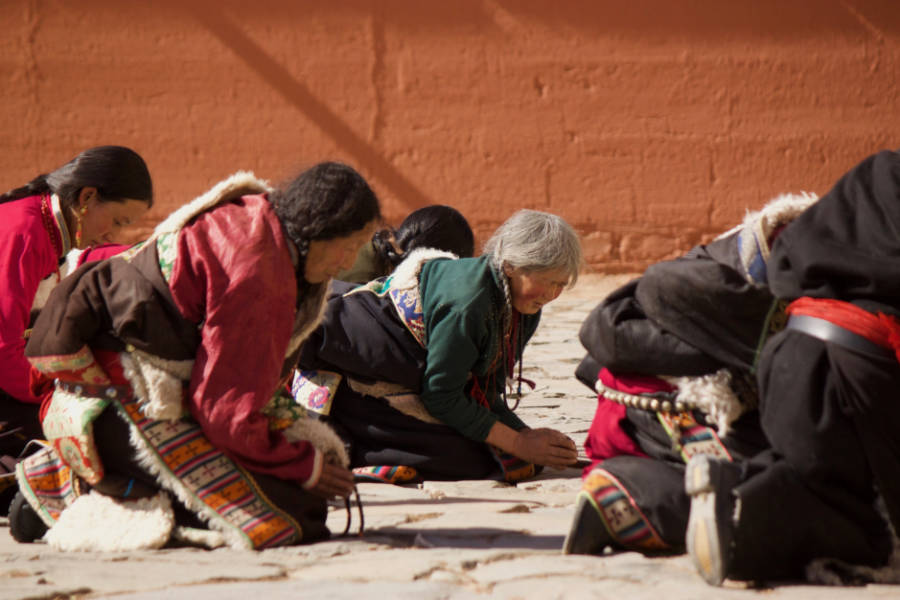
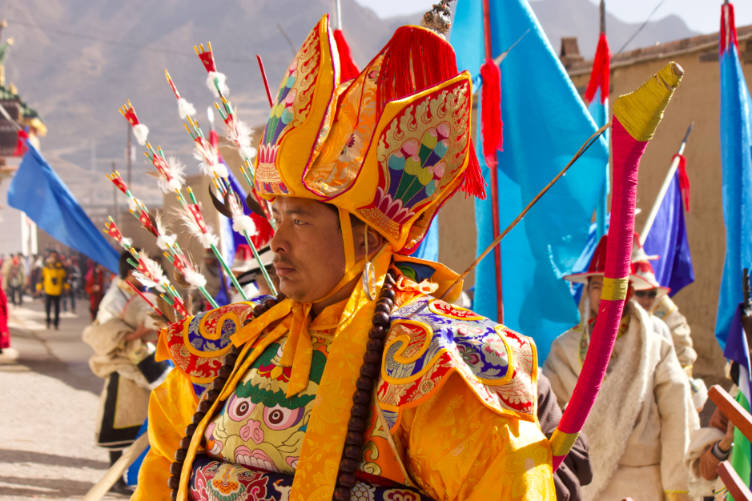
New year events bring all monks together and require with their families and relatives. The monks are trained as musicians and dancers for many months and when it comes to the ritual or fest, the dancers wear Cham masks and garments typically made for Champa( cham-dancers) Each Champa represents certain spirits, diety, oracle, Dharma protector, and so on. The music is live and nothing electronic, The Cham dancers perform according to the rhythm of the big, vibrating horn.
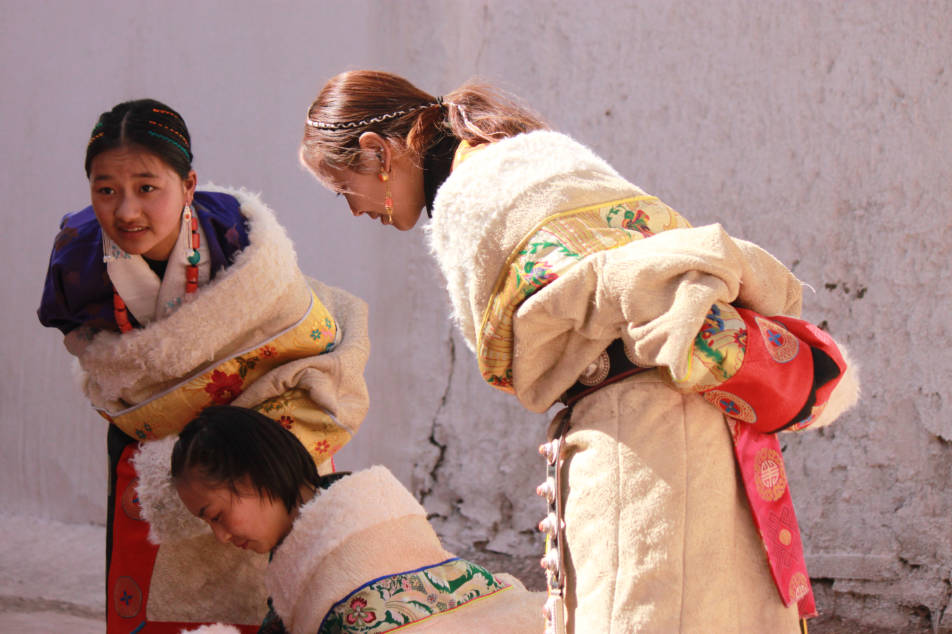
Girls dress their sheepskin garments with their best jewels. The monastery is not only an attraction for Monlam festivals but also a meeting point for young girls and boys.
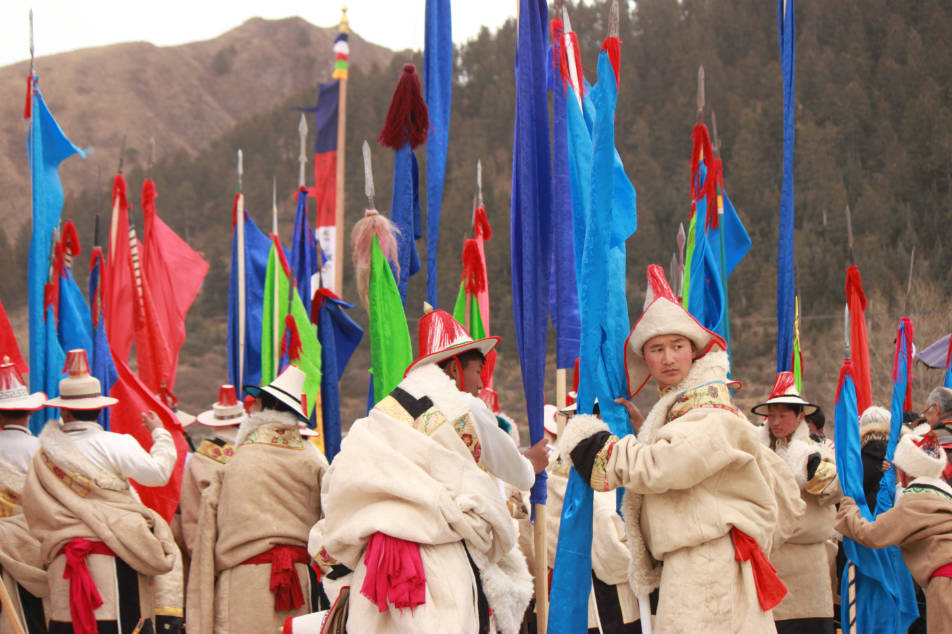
The Tibetan guards in Luqu
Men and women are alike, wearing the best dress and jewels. Dresses made out of sheepskin are quite popular in winter and on special days like the new year.

Monlam Chenmo Programs for 2026
Details
21/Feb. Xining-Arrival in Xining (2200 m) by flight from Beijing or another China international airport and meet your Tibetan guide and driver. Our guide and driver will escort to the hotel and rest. Night in hotel.
22/Feb. Rebgong- (Tongren) Drive to Rebkong (Tongren) with some visits on the way, for instance, Shakhyung Gonpa (Garuda monastery) is one of the four principal Gelukpa monasteries in North-east Amdo. It has a beautiful location with an eye-catching view over the Machu river (Yellow river) bands. Visit a monk’s home and explore their daily life. Rebkong (Alt 2700) is believed to be the cultural center of Amdo Tibet and is known for its traditional arts such as traditional Thangka paintings, brocades, clay sculptures, etc. 160km. Night in Rebgong.
23/Feb. Rebgong-visit the Celebrations at Sangeshong Yagotsang (Wutun ). The rituals, start in the morning and Cham (the mask dances) starts around 10:00 am and finish at 6 or 7 pm. Full day at the Cham Dance. When Cham is finished there will be a Torma throwing stage. This happens at the end of the ceremony with a big bonfire. Night in Rebgong.
24/Feb. Rebgong – Visit the Shalthang Chenmo (giant Buddha Thangka display) at Lower (Mago) Sangeshong Monastery. As the ceremony begins in the morning there will be a large number of people gathering mostly local people in their best traditional dresses. In the afternoon visit the Bon monastery in Mogsar valley and the villages around or Rongwo Gonchen; the biggest Bon monastery in Rebkong. Night in Rebgong.
25/Feb. Gonmer- in Gonmer things are quite different from others. The monks have their assembling early in the morning and local people gather around 9 o’clock. People from the community, from children to old, all come to the monastery courtyard with baskets of bread and buckets of milk tea. Everybody there including tourists are welcomed and offered tea and bread. This is soon followed by a ritual ceremony. Monks in their yellow hat and garments start the ceremony and the huge Thangka, about 25x35m, is carried by hundreds of young boys from the village to the display area. People rush towards the display area and wait for the unfolding and displaying of the Shalthang Chenmo (Thangka). [option] There is Luro festival in Kyangkya village on the same day. In the afternoon, visit the Shambalinkor; the procession of Future Buddha in Sangeshong Magotsang. Night in Rebgong.
26/Feb. Sange Shong Mamgo (lower): visit Masked dances and the Torma offering (sacrificial cake offerings of various shapes and colors;( made out of Tsampa mixed with butter, colored, and decorated in different ways according to the type of deity to which they are addressed, Torma offering) ceremonially presented to deities or spiritual beings for diverse purpose or for the services and attainment. Night in Rebgong.
27/Taktsang Lhamo- visit Kirt monastery and Lhamo monastery
28/Feb. Ngawa- (Aba)Today, it’s also a landscape trip; you will see the first Machu(yellow river) band. Very sparsely populated areas of Tibetan nomads. You will cross three provincial borders of Gansu, Qinghai (Golog region), and Sichuan. Ngawa is in Sichuan province where about 90% of the inhabitants are Tibetan with a rich cultural identity and highlights one of our best destinations. 180km. Night in Ngawa.
01/Mar. Ngawa- It’s a cultural visit today. There are many monasteries with different schools, like Gelekpa, Bon, Nyangmapa, and Jonangpa. Above all, it’s the most special event of the year; the new year. It’s a fest for all, from poor to rich, nomads to farmers, monks to laypeople, animals to spirits. All they have will be exposed during this Monlam Chenmo period. Nowhere else in Tibet as a whole would be able to contain such a culture alive. It’s a marvelous place to be! Today, both monasteries of Kriti, and Gonmang display the giant Thangkha,(Budha images about the size of 25x30m) made out of silk, on a huge wall. Thousands of monks and pilgrims gather here to see the display. Night in Ngawa.
02/Mar. Ngawa local people are dressed in their best clothes, jewels, and other decorative staff available. Men with horses are lined up to the hills where the major offering takes place. Then there is the Masked dance called performing in both Kriti and Gongmong monasteries. In the end, there is the Torma throwing; the most exciting thing of the day. Night in Ngawa.
03/Mar. Ngawa- It’s an evening event today, called Methok khyodpa in Tibetan. It’s a butter scripture display. A distinctive Tibetan Arts skill, completely made of Dril (yak) butter. During the day visit some monasteries, and villages around. Night in Ngawa
04/Mar. Ngawa- today is the last day of the fest (Monlam) and you visit a distinctive monastery called Nangzhig monastery; its Bon monastery. Bon is the pre-Buddhist religion of Tibet. A Religion that has been practiced in Tibet for more than 5-6 thousand years. Today they perform the Bon Cham and Torma throwing: Your visit to Ngawa will be ended with amazing things and full of excitement. Night in Ngawa.
05/Mar. Drive towards Chengdu. The capital of city of Chengdu.
06/Mar. Drive to Chengdu international airport. Departure. 145km
Let’s make your trip with us super personalized! Just share what you like, and we’ll whip up a perfect plan that fits your schedule and makes your experience even better.
Leaving an indelible mark on the landscape of tomorrow.
FAQs
We’ve worked with some of the best companies.
 Tibetan Caravan Tours